
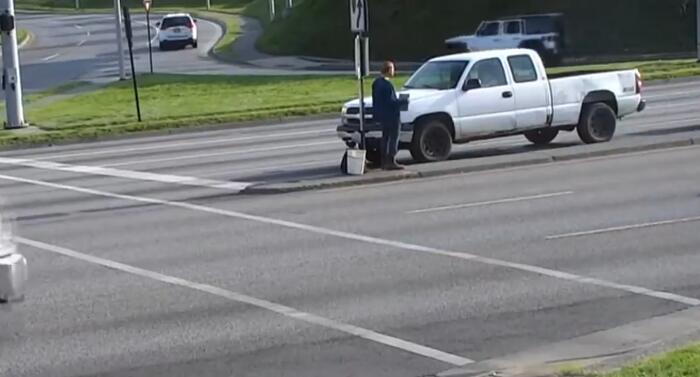
For some people, unlocking a car door means they’re about to head somewhere. For others, it means they’re going home.
A back seat can become a bedroom. A trunk can become a closet. A parking lot can become a place to spend the night.
It’s a form of homelessness that can be easy to overlook — but new research suggests it’s affecting far more people in the Houston area than traditional homelessness counts show.
A July 2026 study from Rice University’s Kinder Institute for Urban Research estimates about 141,400 adults across Harris, Fort Bend and Montgomery counties experienced temporary homelessness during the previous year.
The research, based on a survey of approximately 8,800 residents, included people who had stayed in someone else’s home, a hotel or motel, a car, a tent or an emergency shelter because they had nowhere else to go.
About 5% of all survey respondents reported experiencing temporary homelessness. Among residents earning less than $25,000 annually, that figure rose to nearly 1 in 7. For those earning between $25,000 and $49,999, it was about 1 in 10.
The financial pressures were especially pronounced among lower-income households. Nearly 3 in 10 households earning less than $25,000 said it was very difficult to afford their housing costs over the previous year — and nearly 9 in 10 in that income bracket said it was at least a little difficult.
For organizations working directly with people experiencing homelessness, those findings reflect what they’re seeing on the ground.
At The Beacon, a Houston nonprofit that provides essential services and connects people with housing resources, Director of Essential Services Tanesha Franks said the organization typically serves about 275 to 280 people a day. Over the past six to eight months, that number has climbed to about 300 daily visitors.
Some days, the organization reaches capacity and cannot admit additional people.
Franks said one trend standing out is the number of people living in their vehicles — including people who are still holding down jobs.
“They’re able to come and get a shower, put their work clothes on, get them breakfast and go to work,” Franks said.
Some people maintain gym memberships to help manage daily hygiene while living out of their cars, she said, trying to balance the demands of work and an unstable living situation at the same time.
Franks said people can find themselves in that situation after losing a job, experiencing a disruption in disability benefits or facing an unexpected crisis that strips away their transportation or support system.
One example she described involved a person whose vehicle was involved in a crash. Without transportation, the person faced difficulty getting children to school or daycare — and getting to work. Without a safety net, a temporary setback can quickly become a housing crisis.
The Beacon’s diversion program is designed to help people who are newly experiencing homelessness or are at risk of losing their housing — including those who are couch-surfing or caught somewhere in between.
When someone walks in and requests help, they’re connected with coordinated entry assessors who explain what resources are available in the community. From there, a case manager helps identify options and works with the client toward a stable living situation.
Depending on the circumstances, assistance can include up to three months of support, a security deposit or advocacy with landlords — including those who may have concerns about a client’s rental history.
“We give them a case manager here. We get them a step up,” Franks said.
The goal, she said, is to help people regain stability before they become more deeply involved in the homelessness response system. For anyone who feels they may be on the verge of losing housing, Franks said the first step is simple: walk in and ask.
The challenges extend beyond temporary housing.
Thao Costis, executive director of Harris County Housing and Community Development, said the region has made significant progress in reducing literal homelessness since 2012 — when Houston’s public and private sectors came together to tackle the problem systematically.
The 2026 regional Point-in-Time Count identified 3,321 people experiencing homelessness across Harris, Fort Bend and Montgomery counties on a single night in February. That count includes people staying in shelters as well as those living in places not meant for human habitation.
But Costis said the one-night count captures only a fraction of the broader problem.
“Throughout the year, because of the cost of homes, because of all the other financial and life challenges that people have, they may lose where they’ve been,” Costis said.
She identified housing affordability as the leading factor contributing to homelessness, while also pointing to health challenges, job loss, domestic violence and other personal circumstances. She cautioned against the assumption that mental illness or substance use are the primary drivers.
As temperatures drop, Costis said shelters are likely full — making early access to resources especially important.
Harris County is also working with regional partners on efforts to keep people from entering the homelessness system in the first place, including exploring how to divert people away from the county jail when homelessness — not criminal behavior — is the underlying issue.
Harris County is coordinating with the Coalition for the Homeless on Pathways to Independence, an initiative with a $48 million fundraising goal. At the time of the interview, $34 million had been raised — all from private philanthropic sources, not county funds.
The initiative is designed to fill a gap in existing homelessness programs. Federal funding is largely restricted to people who meet a strict definition of literal homelessness — those living on the street or in places not fit for human habitation. Pathways to Independence aims to reach people who don’t meet that threshold but are still at serious risk of losing housing.
An early pilot has already served more than 600 people, with 92% successfully avoiding a return to homelessness, according to Costis.
For people who are already struggling to keep a roof over their heads, Costis said the first step is reaching out before the situation becomes more difficult. She encourages residents to call United Way’s 211 helpline, which connects people with available housing, shelter, food and financial assistance resources.
Harris County commissioners have also committed local dollars to provide legal representation at eviction court — a resource for residents who find themselves facing eviction and need help navigating their options.
As the holidays approach, organizations like The Beacon say the need is growing. And while homelessness may not always look like someone sleeping on a sidewalk, the need for a safe, stable place to live remains the same.
Residents in need of housing, shelter, food or financial assistance can call 211, operated by United Way.
Those interested in supporting The Beacon — through donations or volunteering, which makes up 60% of its operations — can visit beaconhomeless.org


